Movies that make me cringe and think about them days later? Basically my catnip…
I’ve actually put off writing this blog post for a while, despite the fact that I did see a movie in July that shot to the top of my 2025 list. It would be easy to say that I put it off because I was super busy, or that I had parenting to do, or that I was just lazy, but the truth is that I’ve actually still been sitting here uncomfortable with how the movie made me feel MONTHS LATER. And that made it hard for me to truly articulate what I wanted to say about it, even though my discomfort surrounding the film is a big part of what made me love it.
So I sat on it. And sat, and sat, and sat. I saw other movies that I thought were kind of “meh” (sorry, ‘East of Wall’), movies that were stupid (not sorry at all, ‘Eddington’), and then finally saw another movie that made me squirm in my seat at the movie theater (good job, ‘Lurker’). And seeing this uncomfortable movie reminded me that I never really tackled my feelings about the first one, which I’ll finally reveal as ‘Sorry, Baby’. So here I am, writing about both together. I think I’ve struggled for a while trying to figure out what exactly I like in a movie, and I’m starting to think that “discomfort” might be a core trait for movies that I love.
Lurker
Discomfort is a weird feeling to have when consuming any kind of media. For my more recent viewing, ‘Lurker’, the discomfort was leaning a bit in the Michael Scott direction. So many episodes of The Office make viewers cringe and feel deeply awkward as Michael Scott does and says things that the average viewer would never think of doing or saying. There are many moments in this movie where the main character is behaving in ways designed to make the audience teeter on that line between feeling bad for him but also feeling like his lack of social connections might be his own fault. He makes jokes that don’t land, he’s thwarted in attempts to join conversations, and he always seems to be standing way too close to every other character while he talks to them.

There are movies that would leave these moments as little throwaway bits, but ‘Lurker’ leans in HARD, and that’s where it excels. It’s just so unapologetic and unpandering (not a word, I’m inventing it) that you have no choice but to go along for the ride as the character struggles and fumbles with social situations in a decidedly uncomedic way. He’s not doing it for laughs, that’s just truly who he is and the movie embraces it. And maybe that’s why I connected with this movie in a way I haven’t in a while: I didn’t feel like the studio was trying to cater to the audience by making his awkward ness the punchline. Sure, some of it ended up being funny, but it wasn’t in a way that was manufactured or choreographed, and it made me feel like I was watching a writer’s story instead of “a writer’s story that got edited fifty times by various executives along the way”.
In the interest of not spoiling the movie, I’ll say that it also feels very influenced by ‘Gone Girl’ (more the book than the movie), with the audience struggling to figure out if there is a “right” person in the conflict. In fact, I’ll go as far as to say it made me wonder if being “right” in this conflict even mattered or fundamentally changed anything, and that is exactly why I enjoyed this movie so much. This movie just skipped over protagonists and antagonists and just threw plenty of “agonists” as me instead, and it made me THINK and FEEL and REMEMBER. GIVE ME MORE OF THIS, HOLLYWOOD.
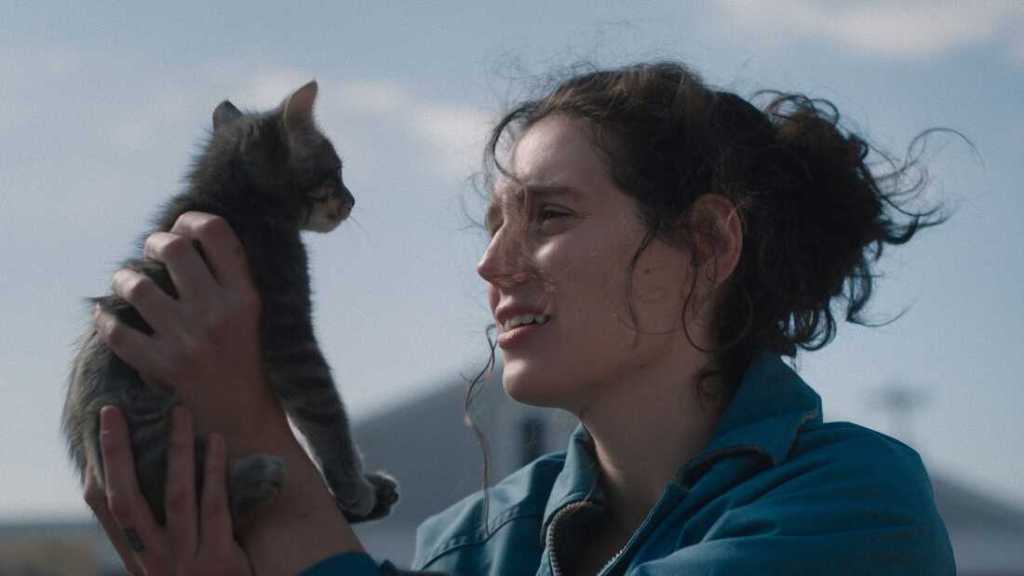
Sorry, Baby
TRIGGER WARNING: This entire movie is about “something” that happens to Agnes, the main character. I don’t think it counts as a spoiler to say that the “something” is a sexual assault, since it’s pretty obvious what they’re alluding to even in the trailer. That being said, if content about sexual assault is something you want to avoid, you can skip to the very end of this post.
If you’ve caught me 2+ beers deep at a bar talking about movies, you’ll probably already know that there are a few things about movies that drive me insane: runtime being undeservedly long, lack of (meaningful) female characters, and gratuitous sexual assaults.
Is sexual assault something that happens to people and therefore could happen to characters? Of course! But there is a lot of both movie and television content in the last decade that has fallen into the trap of either making an extremely graphic scene depicting it (which feels to me a bit performative and diminishing), or it’s some kind of fast-track to giving the character “damage” or “trauma” without having to really explain more, particularly with female characters. Male characters seem to have much more diverse backstories to give them complexity, but a female character who has deep anger or sadness can just be written to have been assaulted in the past, and that seems to check the box off for “backstory”. And after such trauma is revealed, it often leads to many expectations placed on the character for how they will now react to things and how they will proceed through the story. Sometimes, even a lack of reaction from them is a plot point, as if they are not damaged enough by what happened to them, and they need to process it more and work through it before the plot can fully proceed.
“Sorry, Baby” threw all of that out the window. It feels bizarre for me to describe a movie about a sexual assault as “refreshing”, but that’s exactly what it was. The way Agnes deals with the “something” that happened to her is so organic and inconsistent (in the best way), and even moving forward in this review, I’m going to stop using the term “sexual assault” and just say “something” or “the thing that happened”. The labeling of the incident (or lack of labelling) is actually part of what I found so incredible about this movie. Agnes never actually calls “the thing that happened” any specific terminology that one might normally expect, and I was blown away by how deeply I related to her hesitance.

This is where I apologize to my two subscribers, because they’re people who know me in real life and are about to find out actual information about me that I haven’t previously shared: I related so deeply to Agnes’ story because “something” also happened to me a number of years ago.
My inability to label what happened to me has been pretty consistent over the years. One person I told (years after the fact) did use the r-word when I described what happened, but if I’m being honest, I’m probably still not ready to label it that way myself. Intellectually, I can’t deny the mechanics of what happened, but emotionally I have always felt that calling it something specific would somehow change me and make me a different kind of victim than I was ready to be. I suppose I also have to acknowledge that it was a grayer situation than a textbook definition, being that it was someone I knew and trusted. I don’t think anyone in my life would ever think that it was consensual if I told them what happened (and anyone who thought that would promptly be kicked out of my life), but there is always going to be a small percentage of my brain tucked way in the back thinking “well here’s how someone else could interpret it”, making it harder to stamp a label on it no matter how reasonable the label might be.
I think this is partly why I’m so irritated by gratuitous sexual assaults in media. Not only do I feel like it’s being used sometimes to just shortcut into a specific type of plotline, but I also think that the victims in media are most portrayed in one of two ways: emotionally broken and defeated, or hardened and emotionless and out for revenge. Their entire personality seems to have their trauma at the core of their being, and it pushes them in two binary ways that don’t always feel organic. It lacks a lot of nuance that “Sorry, Baby” has in spades.
Sometimes, Agnes is emotionally devastated and drained and depressed. But also, she’s sometimes not. She has trouble articulating what happened to her, but she sometimes also shares information with people you wouldn’t expect. Sometimes her life is normal, and she feels weird about the normal bits. At one point, she goes as far as to say:
“I feel guilty when I don’t think about it.”
I actually feel like there are some parallels to how sexual assault and motherhood are portrayed in media. In both, women mostly all act the same way in response, and it can seem to the audience that if you don’t react like most women do, then you are doing something wrong. If you are not a besotted new mother constantly basking in the glow of the new life you created, you aren’t being a proper mother and you don’t love your baby! If you aren’t either traumatized or seeking revenge after an assault, then maybe it wasn’t that big of a deal after all and you aren’t really a victim!
I don’t want to go into too many more details, mostly because the entirety of “Sorry, Baby” is worth seeing, and I don’t want to spoil anything. Overall, this movie hit an absolute bullseye with me, so much so that I couldn’t sleep for hours after I got home because I was so incredibly uncomfortable. This was obviously a different kind of discomfort compared to last week’s screening of Lurker. This discomfort was centered around how validated and seen I felt, even if I’m still not quite comfortable admitting that I experienced the same type of situation that Agnes did. I kept waiting for the movie to make her act in the way most media would expect her to act, and she never did, because there should never be any expectations for how victims behave. There is no “right” or “wrong” way, there is no easy definition or explanation, and there is no magic combination of words or support that can change what happened.
For me, what happened to me will always be there, but it’s increasingly become a tinier and tinier part of my brainspace. I can often go months without thinking about it, and when I do, it’s in ways that don’t change how I act or what I say, so it goes completely unnoticed by others. There have absolutely been times when I thought I wasn’t properly grieving or that I wasn’t traumatized enough based on what I’ve heard or seen in the media. “Sorry, Baby” is a beautiful reminder that just existing as a person who “something” happened to is dealing with it in the proper way.
Conclusion
I didn’t actually have anything here, but I did put the trigger warning there and suggested people skip to the end if they wanted, so… here’s a gif of sleeping kittens to close things out. Meow meow.

 Flicks and Feelings: Amateur Movie Opinions
Leave a comment